Beautiful Feet Review + My Father’s World Adventures

Beautiful Feet books. 

3371_1

They do it to me every time.
benjamin-west-and-his-cat-grimalkin-9781481403948_lg

Online or at a conference, I am drawn to them.

Moth to a flame.
34249_1

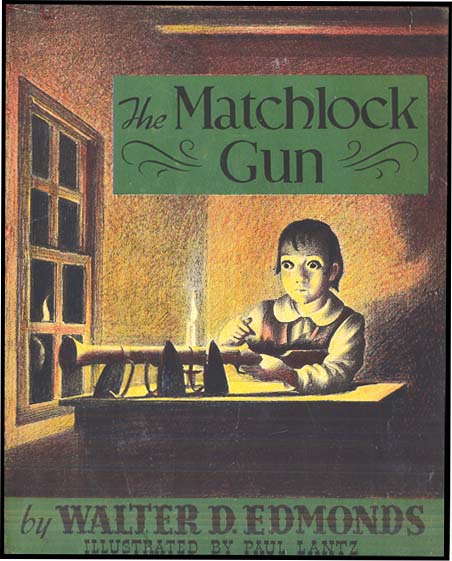
We are using their Early American History: A Literature Approach for Primary Grades along with My Father’s World Adventures.

I love reading to my kids. The majority of the books studied in EAH were all ready on my book list for MFW. I had flipped through their guide at the FPEA convention this year and loved the way they went through each living-book. The study can be completed in two years or in one year, depending on how many lessons you decide to complete each week.  I will say from the onset that I am in no hurry to complete Adventures. Maybe we will finish in one year, maybe it will take two. What I know for certain is my desire to make the most of this wonderful season in their lives.
003436

They employ the Charlotte Mason method of education: reading, reasoning, relating and recording. If I am going to incorporate something, I want it to integrate well with the learning style we employ. Beautiful Feet meets the standard.

The EAH guide opens with this quote from Cervantes:

“…the ultimate end of writing is both to instruct and delight.”

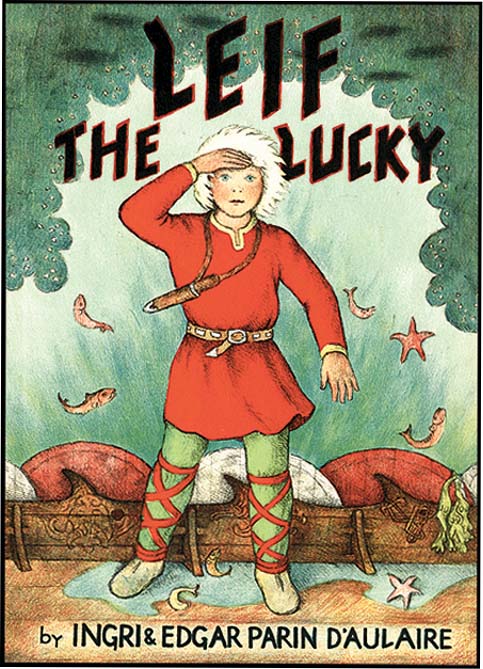
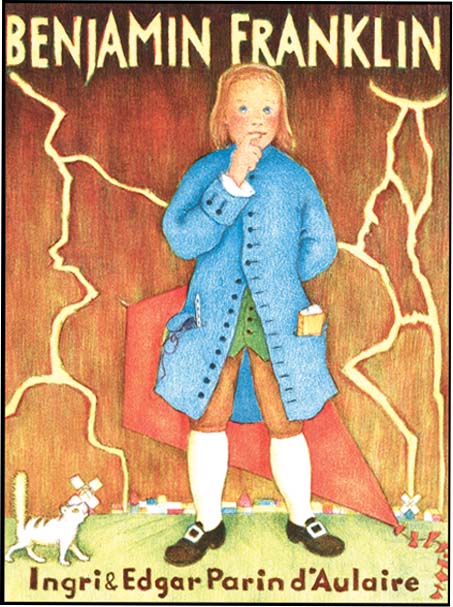
We just completed our first book study, “Leif the Lucky” by Ingri & Edgar Parin d’Aulaire.  Instruction and delight indeed!

I would have read “Leif the Lucky” this year, no matter what. Its just too excellent of a book to pass up on. However, we would not have delved into the book to the extent that we did without this guide.

Topics like the principles of self-control and moral sense, were discussed by looking at the text and digging through scripture. We memorized a poem and used a dictionary.  EAH made us stop and really reflect on this book. Each lesson provided socratic questions to further enrich our discussions. Beautiful coloring pages, which are free to download, accompanied the lessons. This gave my children a closer look at the d’Aulaire’s gorgeous artwork. My son was inspired by these exercises and now tries to imitate their work in his own independent projects. Nothing sweeter than amateur d’Aulaire-esque Lego mini figures and dragons.

1893103315

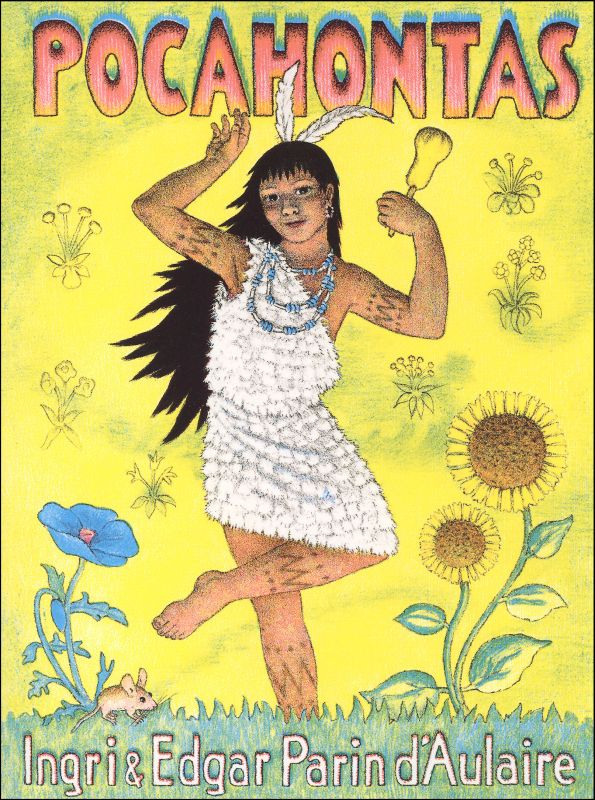
There are 19 books studied in this guide. They all pertain to American History but not all match up precisely with MFW’s schedule. For example, Leif the Lucky, Columbus, Pocahontas, Jamestown and Pilgrim Stories all fall nicely into the sequence. But in later lessons we will be reading through Winter at Valley Forge while we study different states. I am ok with these themes not lining up perfectly. I don’t want to rush lessons in one curriculum or pull back on another just to make them meet up. It will be interesting to see how the children react to newly introduced books that relate to something they learned weeks prior. What will they still recall? How will a slower study of a living-book influence their understanding of the topic? How will this fit into the framework of their timeline now that they know “what happens next”? 21513_1
I have not purchased the entire package of books used with the guide. I plan to find them little by little on thrift sites or at used curriculum sales.  Some we will be able to find at our local library and I can decide later if we would like to add those books to our personal library.

I’ll be checking in throughout the year as we try and incorporate these excellent Charlotte Mason based curriculums. If you are using Beautiful Feet books along with My Father’s World, please chime in the comments and let us know how your experience has been!
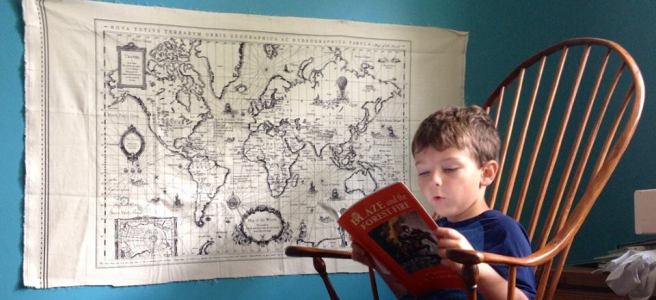
My Father’s World Adventures Year: Getting Ready

I can’t believe second grade is upon us, but here we are! After a lovely  “Summer in Spring” break, we are ready to start My Father’s World Adventures.

For all you MFW Mamas out there—here is a breakdown of how we “organized” our year, what extras we tossed in and what we took out.

I know lots of über-organized Moms like to label, laminate and make special work boxes for each subject, etc. God bless you, wonderful organized women!  I am not gifted that way.  If I tried to buy one of those rolling rainbow carts I keep seeing on the Facebook page for Adventures, it would end up hijacked by toddlers driven wild by malicious intent to destroy shiny newly discovered object. The once lovely homeschool cart would end up a fully weaponized derby cart for chickens before the week was out.  So yeah, this post won’t feature work boxes of doom.

BEHOLD!
IMG_4612

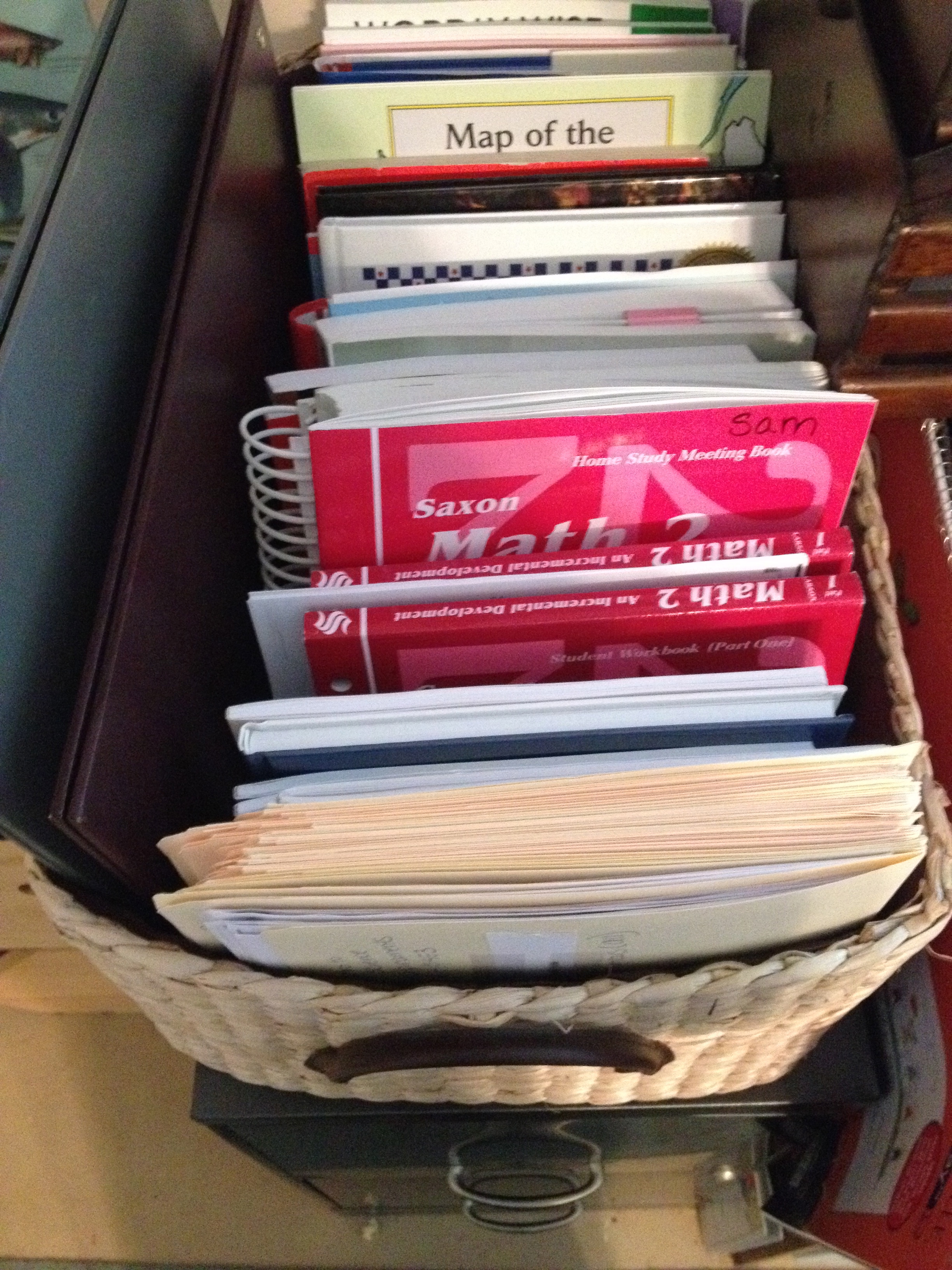
I call it, “Basket of Curriculum.”

Don’t everybody pin it all at once.

The MFW manual has planned out the curriculum by week. I have found that the homeschool planner term “week” is equivalent to a thumbtack-encrusted anvil about my neck. Weeks 1-4 will be fairly smooth, but you know by the time 5 hits someone will be throwing up on Tuesday and on Thursday you will need to make a meal for your super pregnant friend who is on home lockdown with her 9 kids. You’ll have to mash tons of lessons in on Friday and miss your nature walk, all for the sake of getting that crisp week long unit in.

So I ignored the word “week” and subbed in “unit” or “theme.” The lid is off the pressure cooker AND if we are having a great time on a certain topic we can stretch it out a bit without feeling like we are behind.
IMG_4613
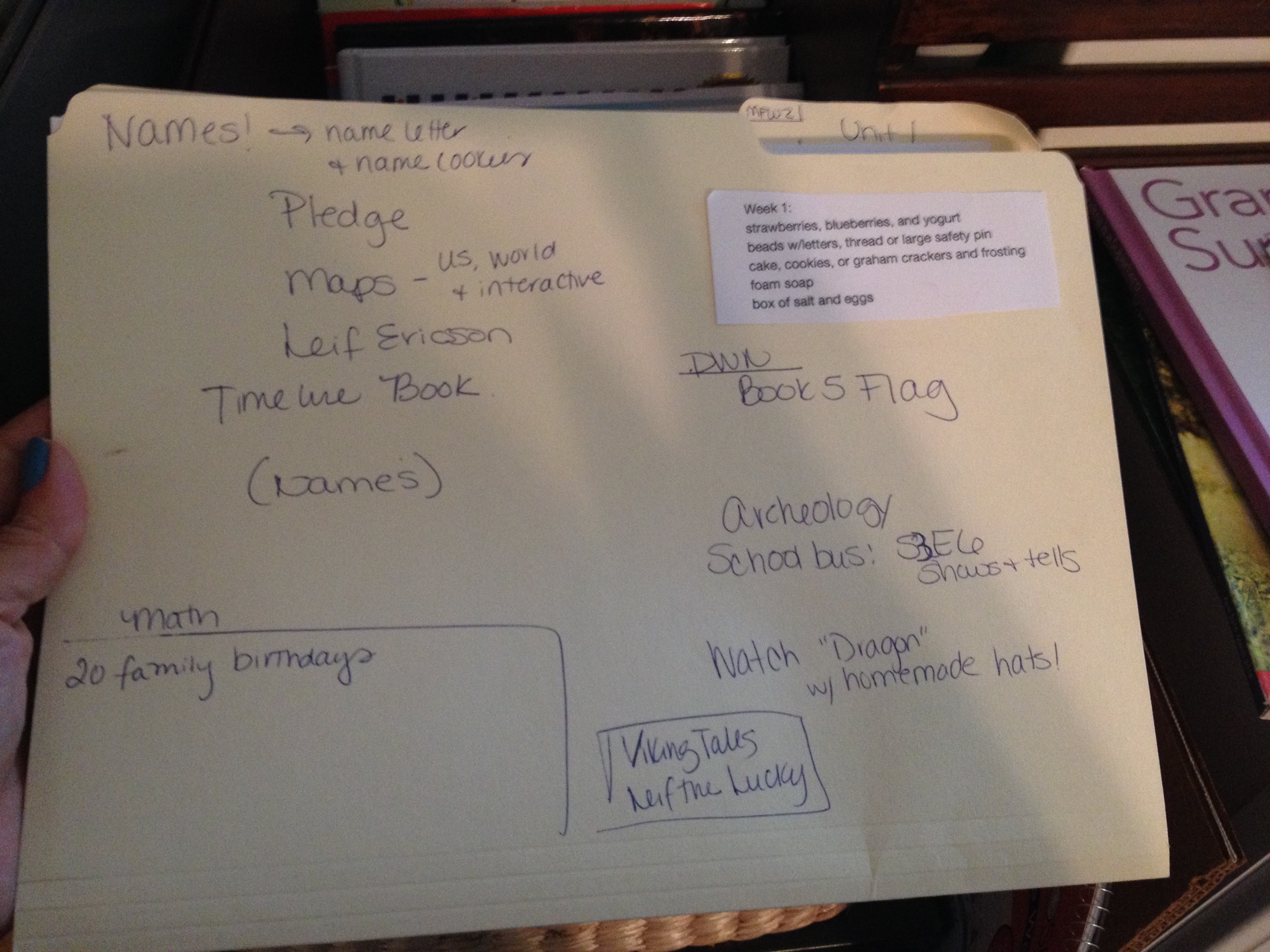
Each unit has its own high-tech manilla folder. I write out all the various themes, supply lists, Draw Write Now page numbers, pinterest ideas, correlating Magic School Bus episodes, etc., on the outside.  I enjoy pulling it out for the sheer pleasure of gazing upon its state of the art efficiency.

Thankfully, there are lots of loose hand outs this year.

Yaaaaaayyy.

Gone are the days of 1st grade spiral-bound splendor.

Last year, my Christmas list had a comb binder on it (take a moment to absorb the coolness of that confession) so we traded spiral binding for comb binding…

unnamed

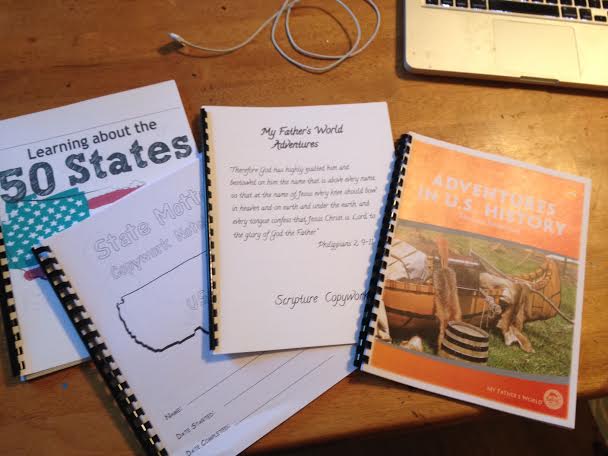
The boys each have four bound booklets.

1. States Notebook (State sheets from MFW)
2. State Motto Copywork book. (Extra handwriting practice)
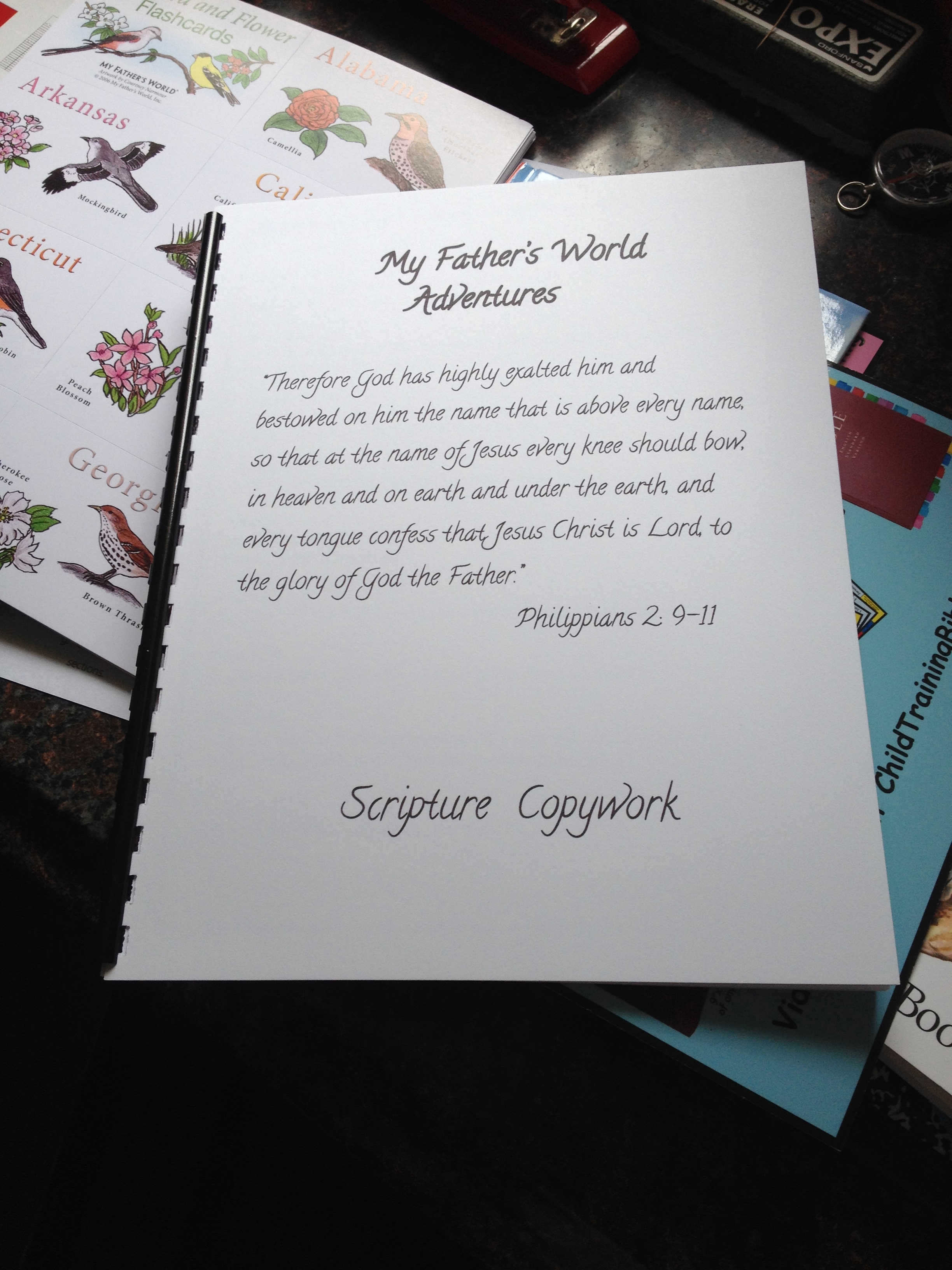
3. My Father’s World Scripture Copywork (Scripture sheets from MFW)
4. Student Sheets Notebook

IMG_4422

The rest of the basket contains:

1. Saxon Math 2
2. Spelling by Sound and Structure
3. Writing With Ease Level 2
4. First Language Lessons for the Well Trained Mind
5. Usborne Scince (Included in MFW Curriculum package)
6.  Teach Them Spanish Grade 2 (A cheap win!)
7. Star-Spangled State book
8. Maps
9. CTB Bibles
10.Early American History: A Literature Approach for Primary Grades
11.Classical Conversations (which includes our new grammar, Art, Music Theory and Science)

IMG_4615

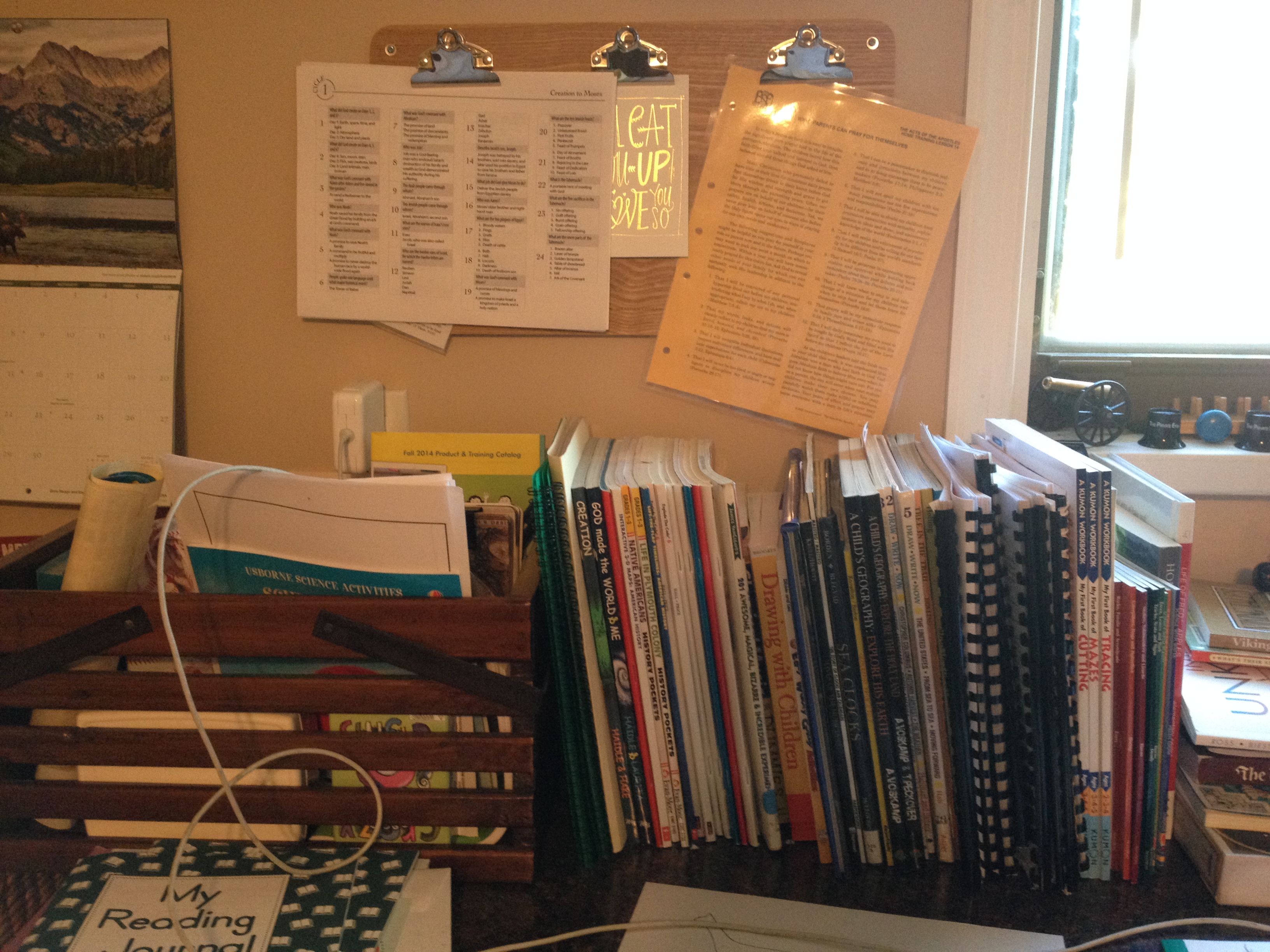
Most of my reference books I stack next to my other basket, which holds timeline cards from Classical Conversations, tin whistles, flashcards, etc.

Explode the Code, Draw Write Now and any other remedial teaching aids I need to access quickly rest against that basket.

If its one area I don’t skimp on, its books! I am a mathematics disaster zone so the personal library overload is a bandaid on my numerically illiterate heart.

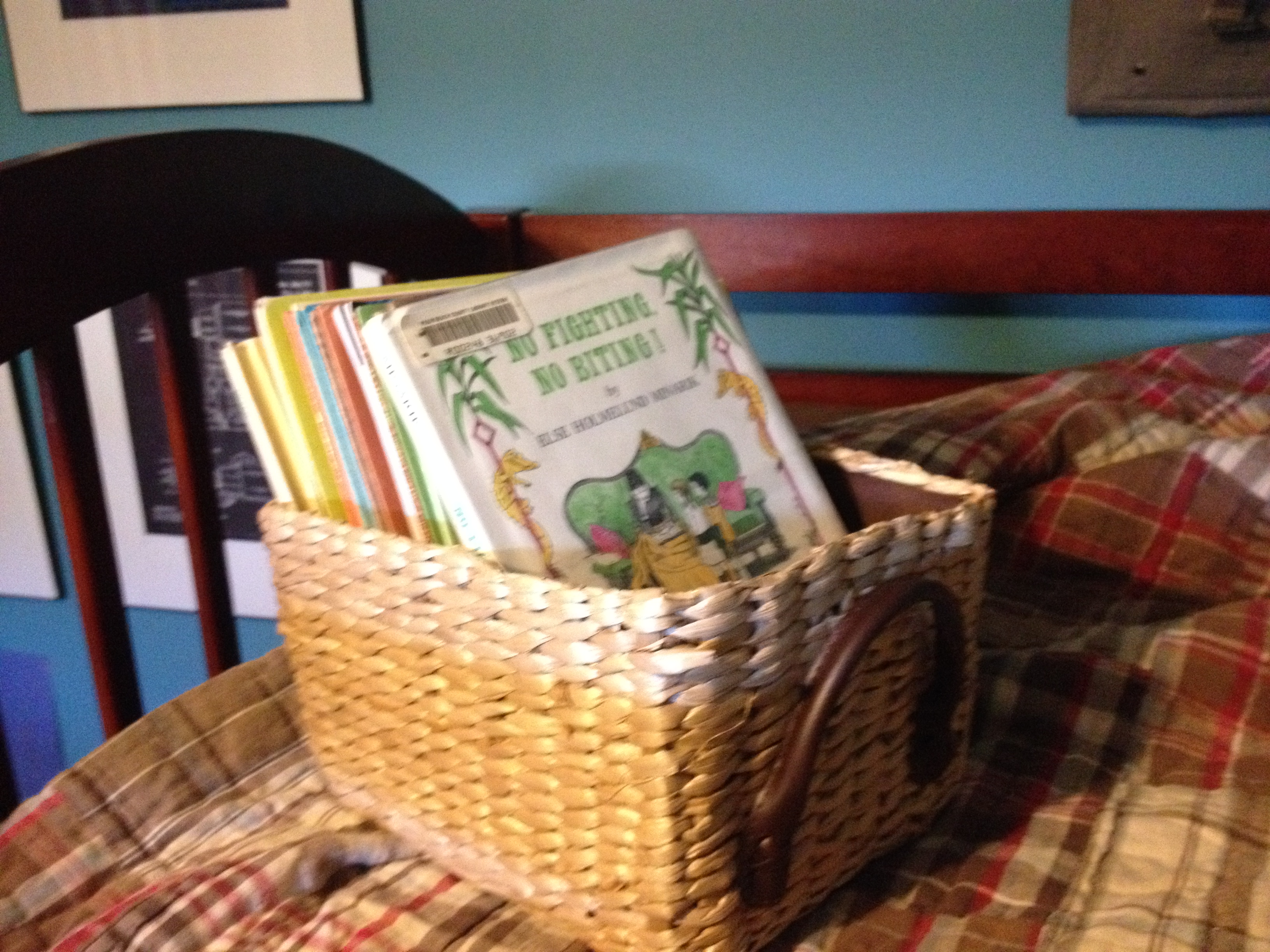
The boys have small book baskets on their bed, filled with read alouds from the library.

IMG_4621

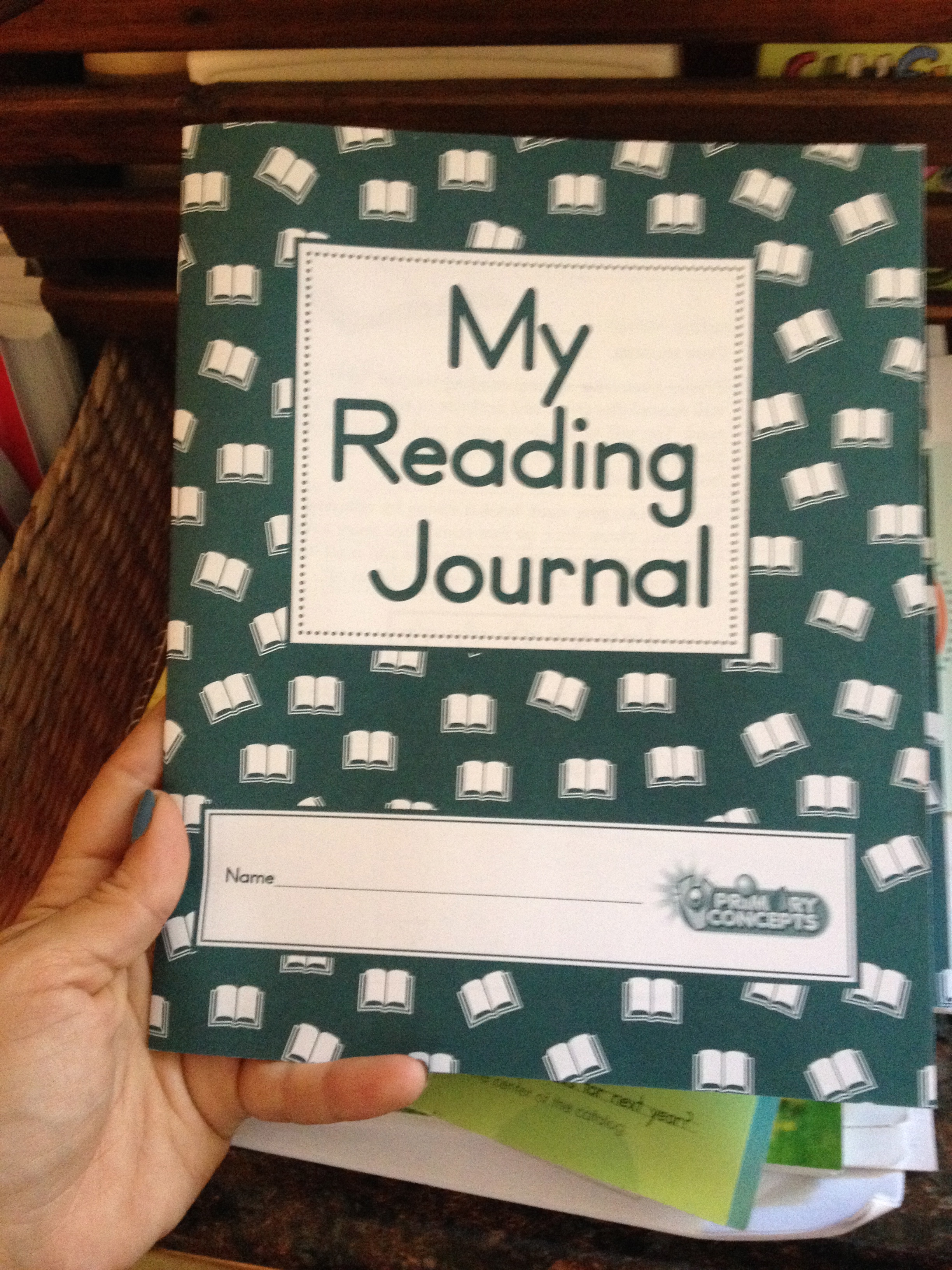
I am encouraging them to keep a simple log of their favorite books this year.

IMG_4614
Found this puppy at convention last month in the Rainbow Resource booth. I have no doubt that this particular item will either be a total hit or miserable miss.

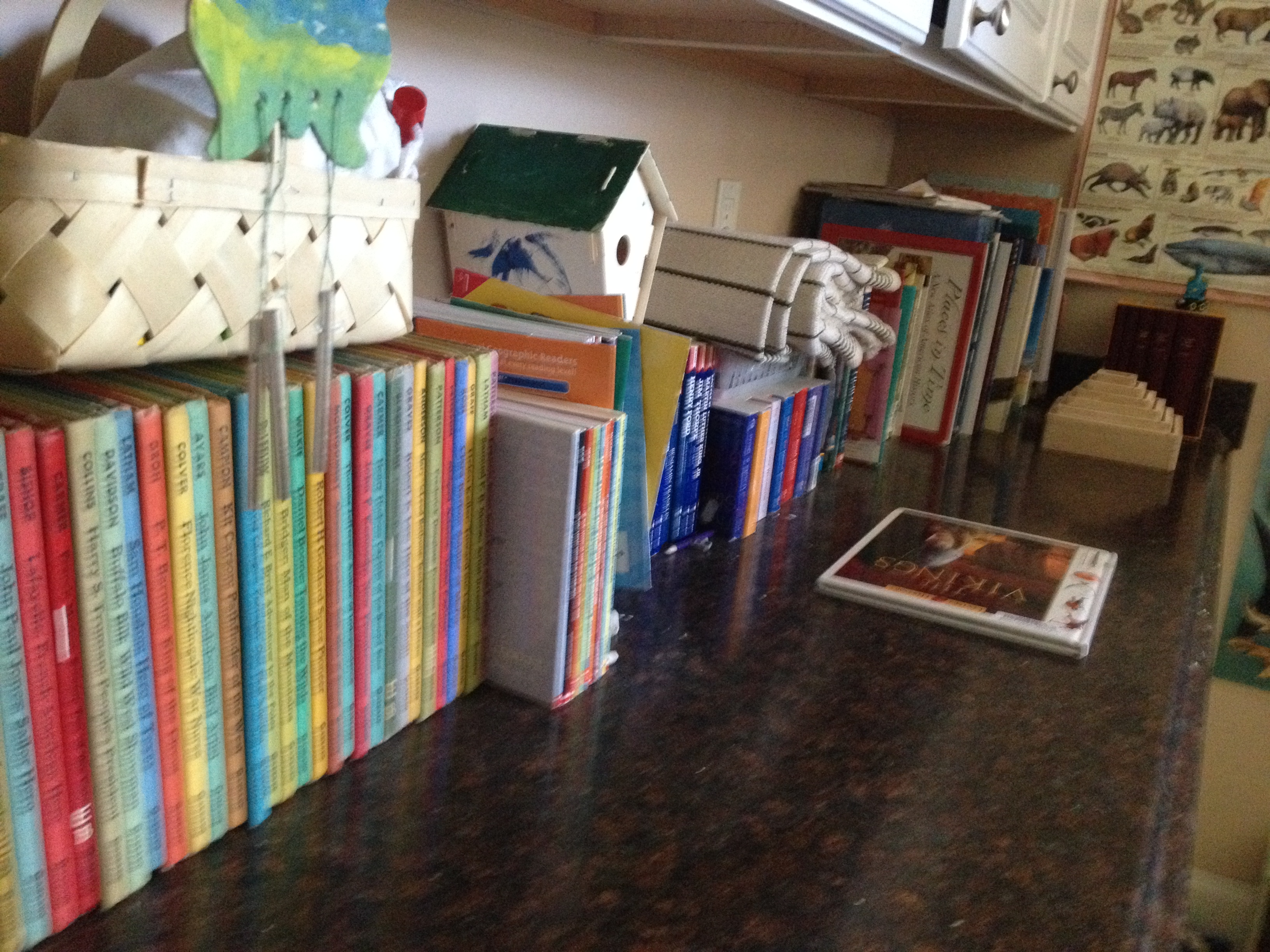
I have also surrendered my counter space in the classroom to our History books. We received many of these when a local library closed and everything else was found at thrift stores or thrift sites. I’ve added several books off of the Sonlight core reading list for American History, which I bought used.

IMG_4599

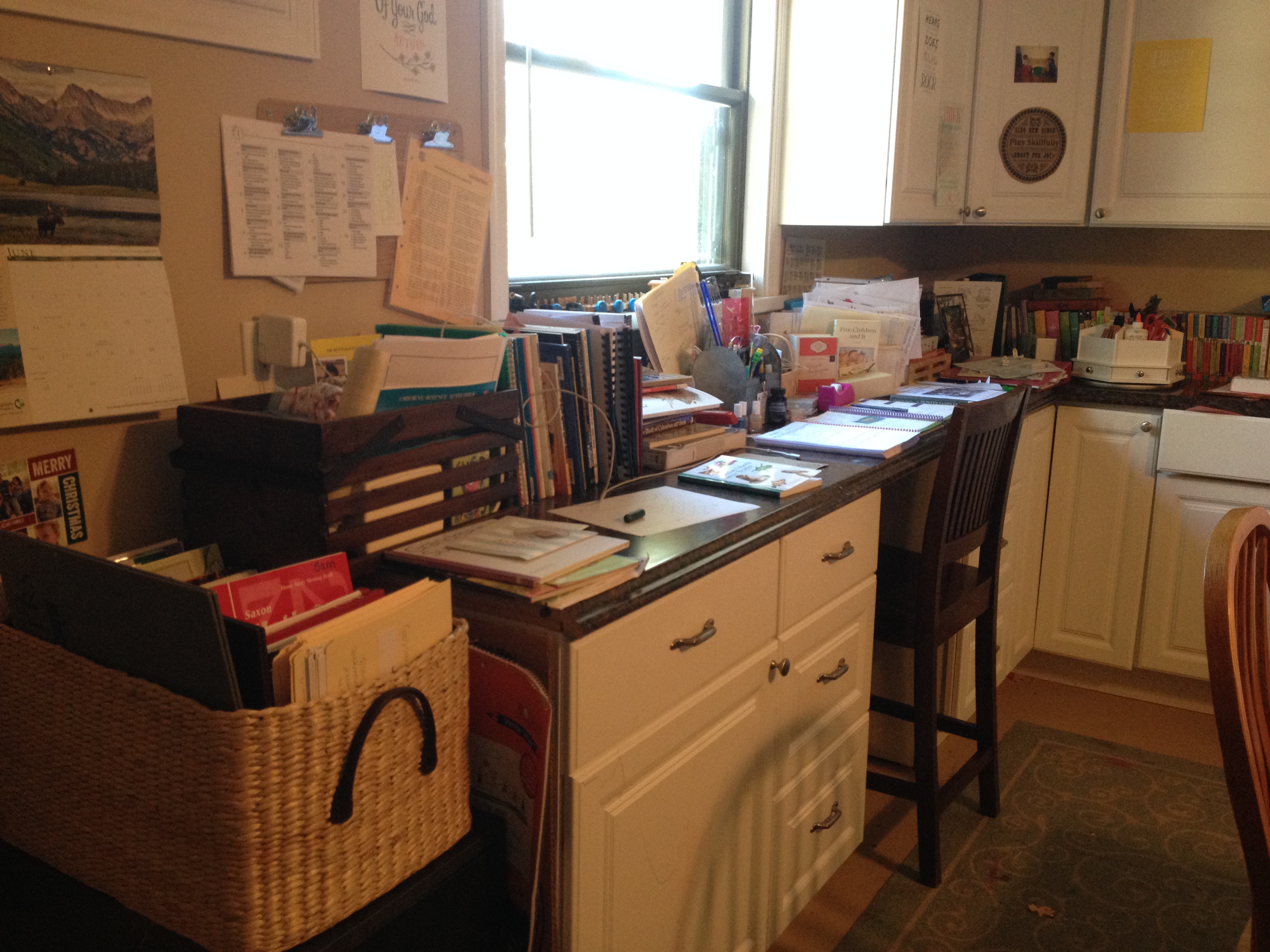
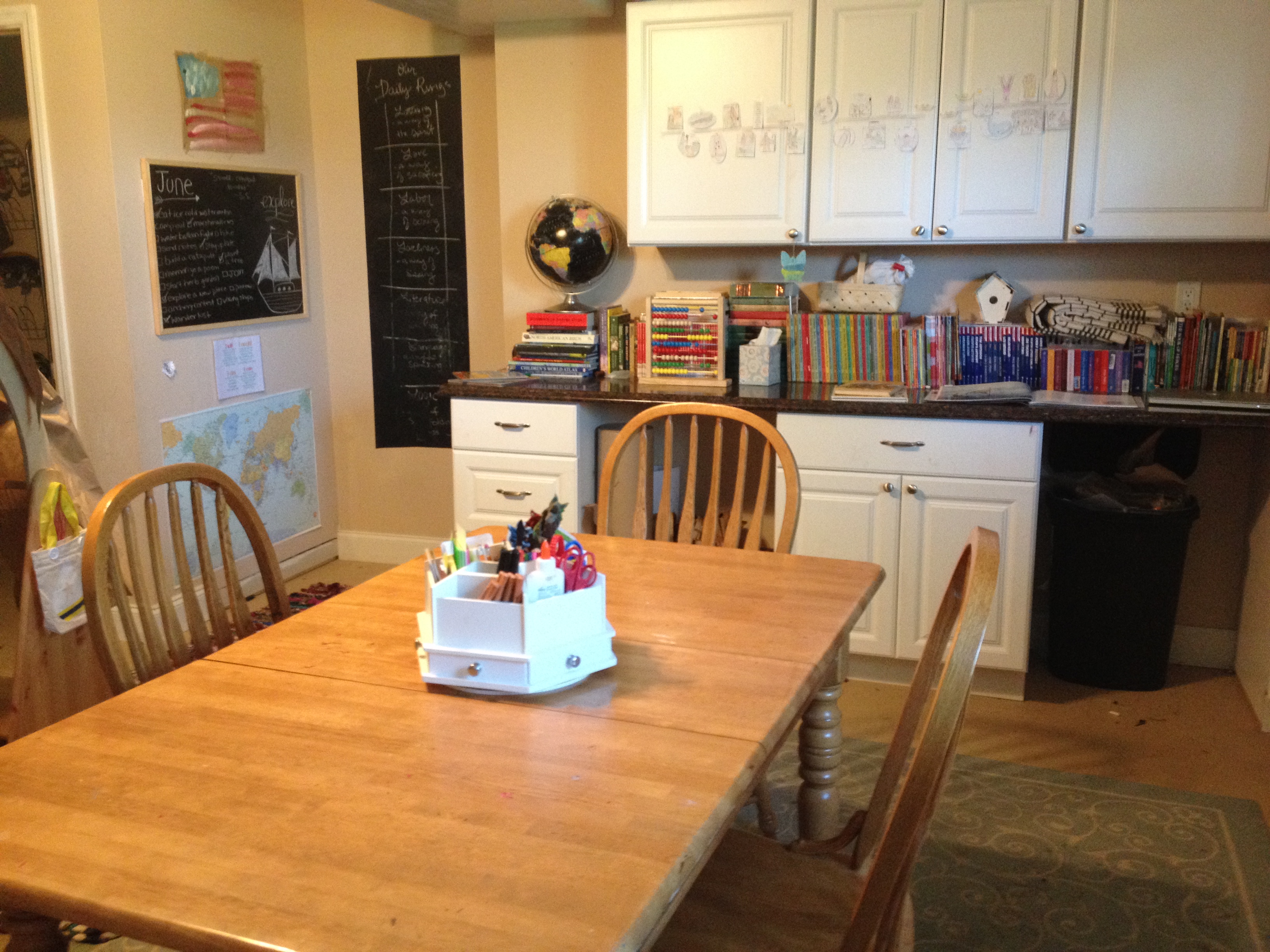
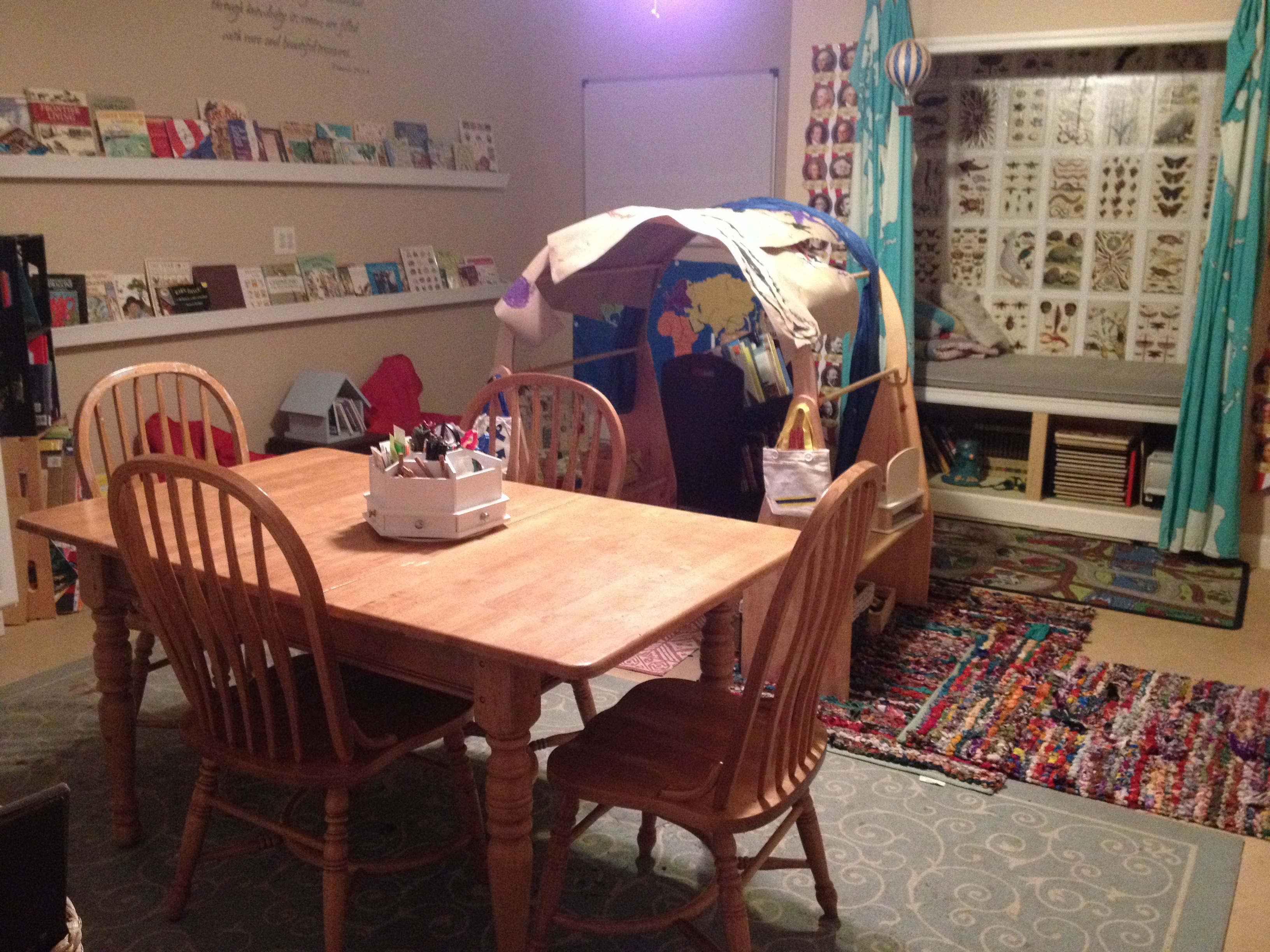
And now for a quick look at the setup in our classroom  (which was once a garage, refurbished into an office space by the family that lived here before we bought the farmhouse).

This is the cleanest my work space will look all year. I am more than ok with it looking a bit messy. I love those Montessori preschool spaces with their airy light and open bookcases and trays of educational goodness, free from pesky bourgeois germs, boogers and crayon marks. Alas, this classroom is dripping with books and papers and life, and so the lofty Montessori Play Space pins remain in the graveyard of my pinterest board.

IMG_4611

The work table. A donation from the basement of my generous in-laws’ home. I go through at least one bottle of Goo Gone on that table alone each year.

IMG_4616

The upper cabinets are stocked with art supplies, audiobooks, math manipulatives, science supplies and yard after yard of lovely fabric and bundles of yarn, relics from when I used to have this amazing thing called “Time.”

The rest of the classroom is outfitted for the imaginative play needs and heavy-handed dictatorial demands of the preschoolers. Nothing matches and everything is covered in a fine layer of cracker crumbs.
I love our play stand, which is rarely used as pictured in the catalogues. It is, in fact, a jungle gym for marine training, and occasionally moonlights as a covered wagon, submarine, wigwam, and/or a Starbucks.

IMG_4554
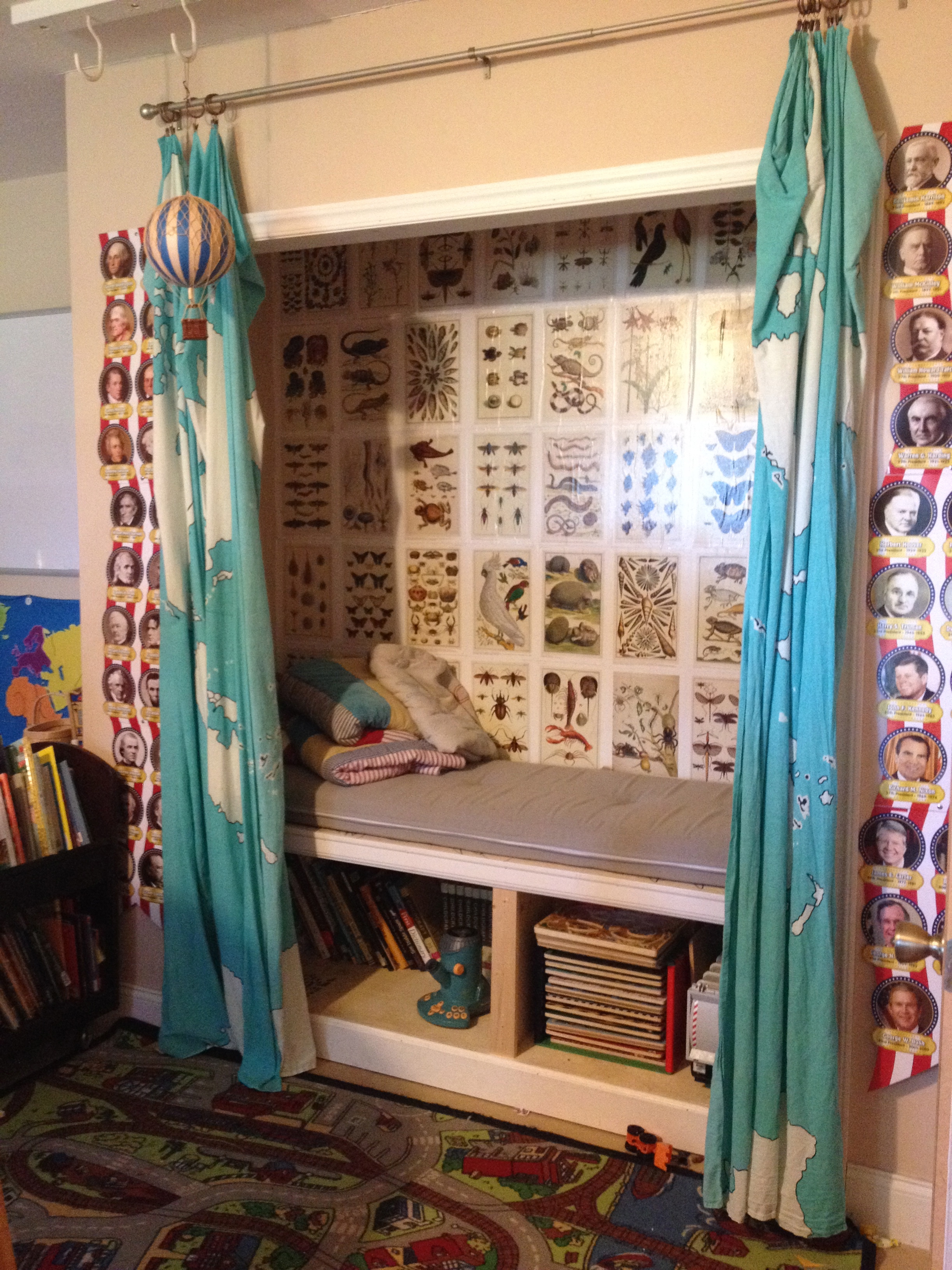
The book nook was built by my Hubs and Father-in-law. I modge-podged pages from a science book onto the back wall. The lower cubbies hold a science center to the left, puzzles and cars to the right. When the curtains unfurl they display a terribly inaccurate map of the globe courtesy of Urban Outfitters.

IMG_4620

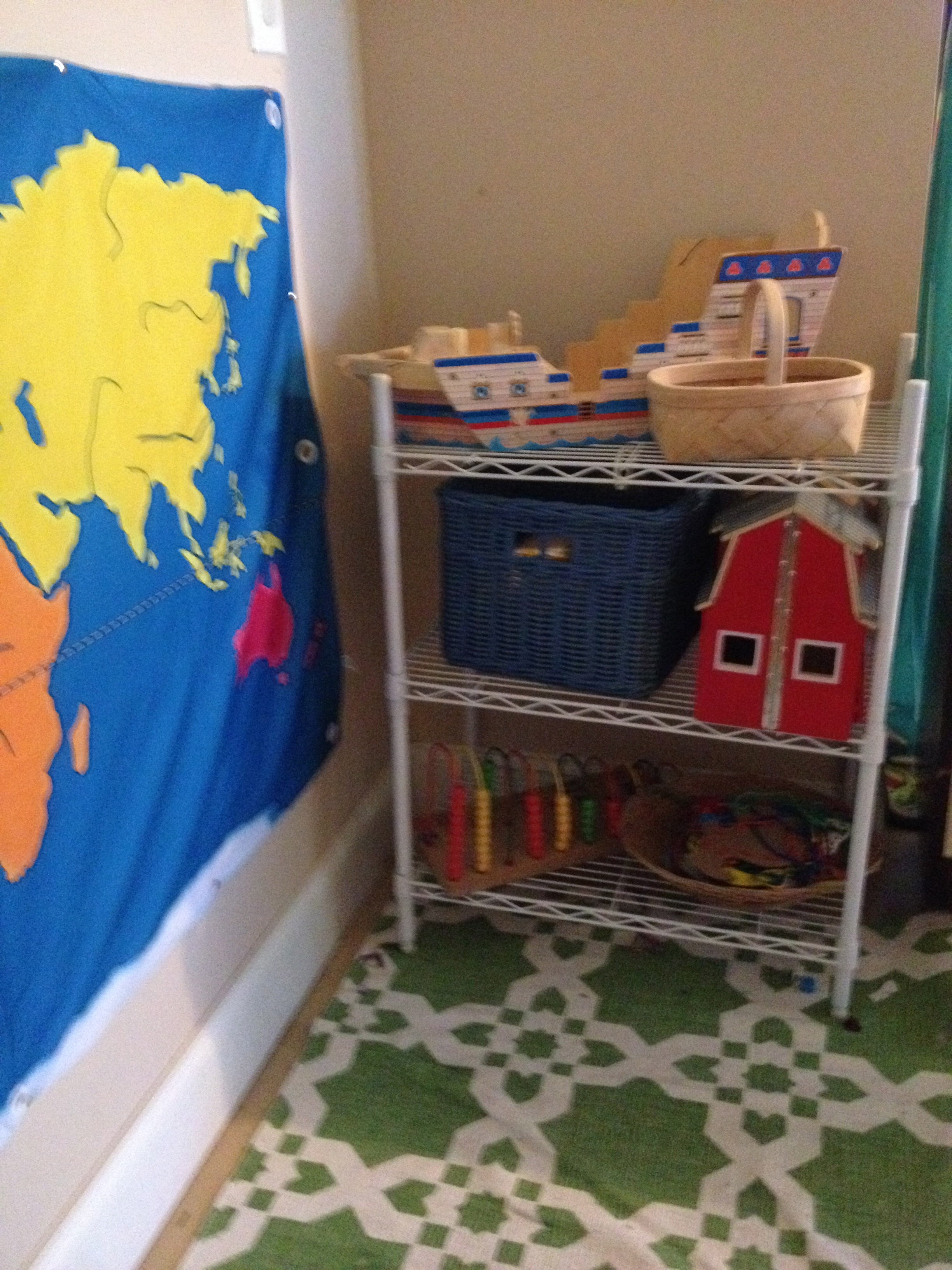
I try to stack things in corners for the nosey ones to sort through: lacing cards, magnet tiles, a basket of peg pirate people. By the end of the school day these shelves are typically empty and some enraged tiny person is standing on its wiry top, shouting down at the rest of us.

IMG_4618

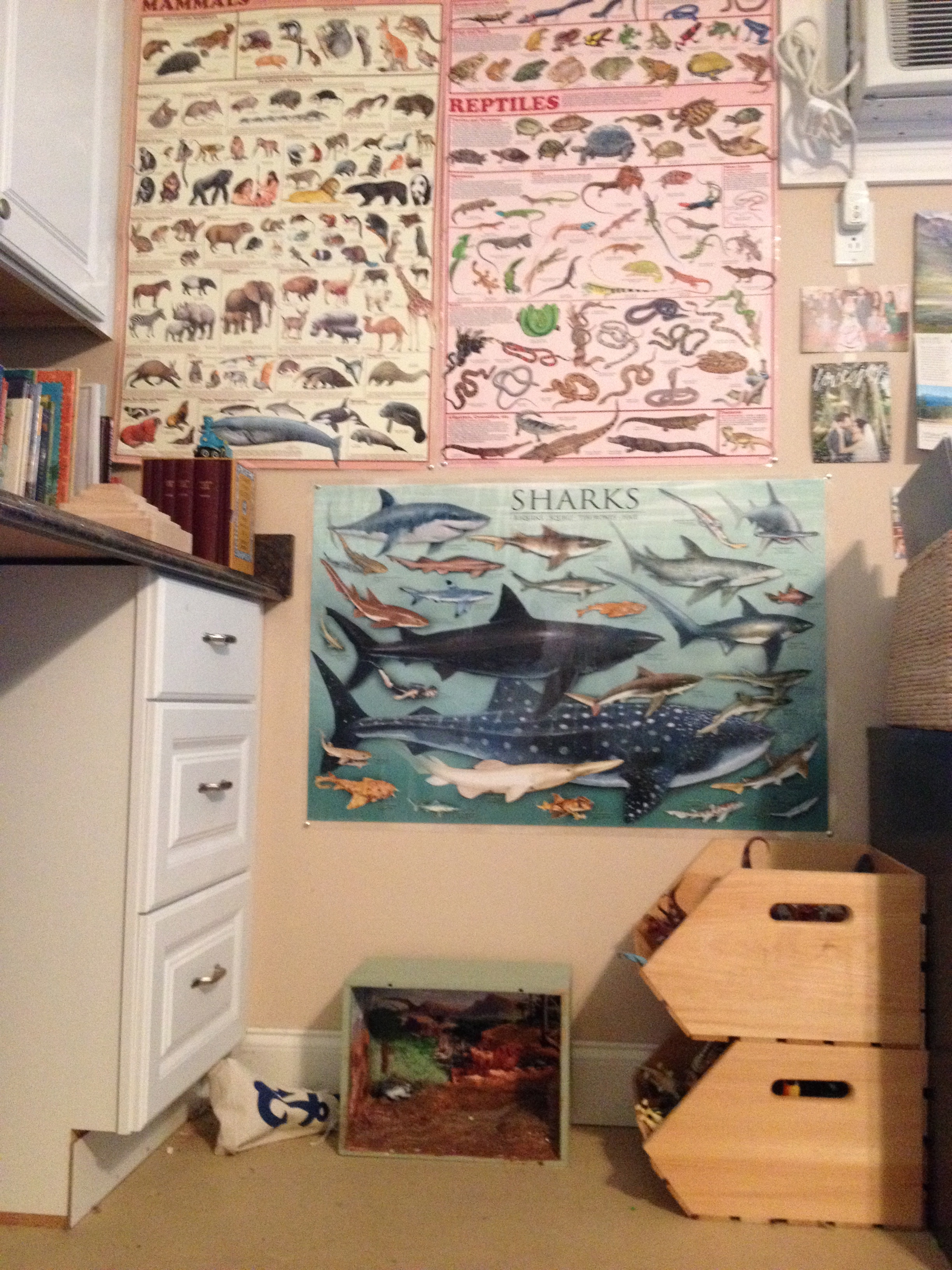
All of our Schleich toy animals live in wooden sorting crates under these science posters. They do take frequent sojourns throughout the house, but this is their main landing place.

IMG_4619

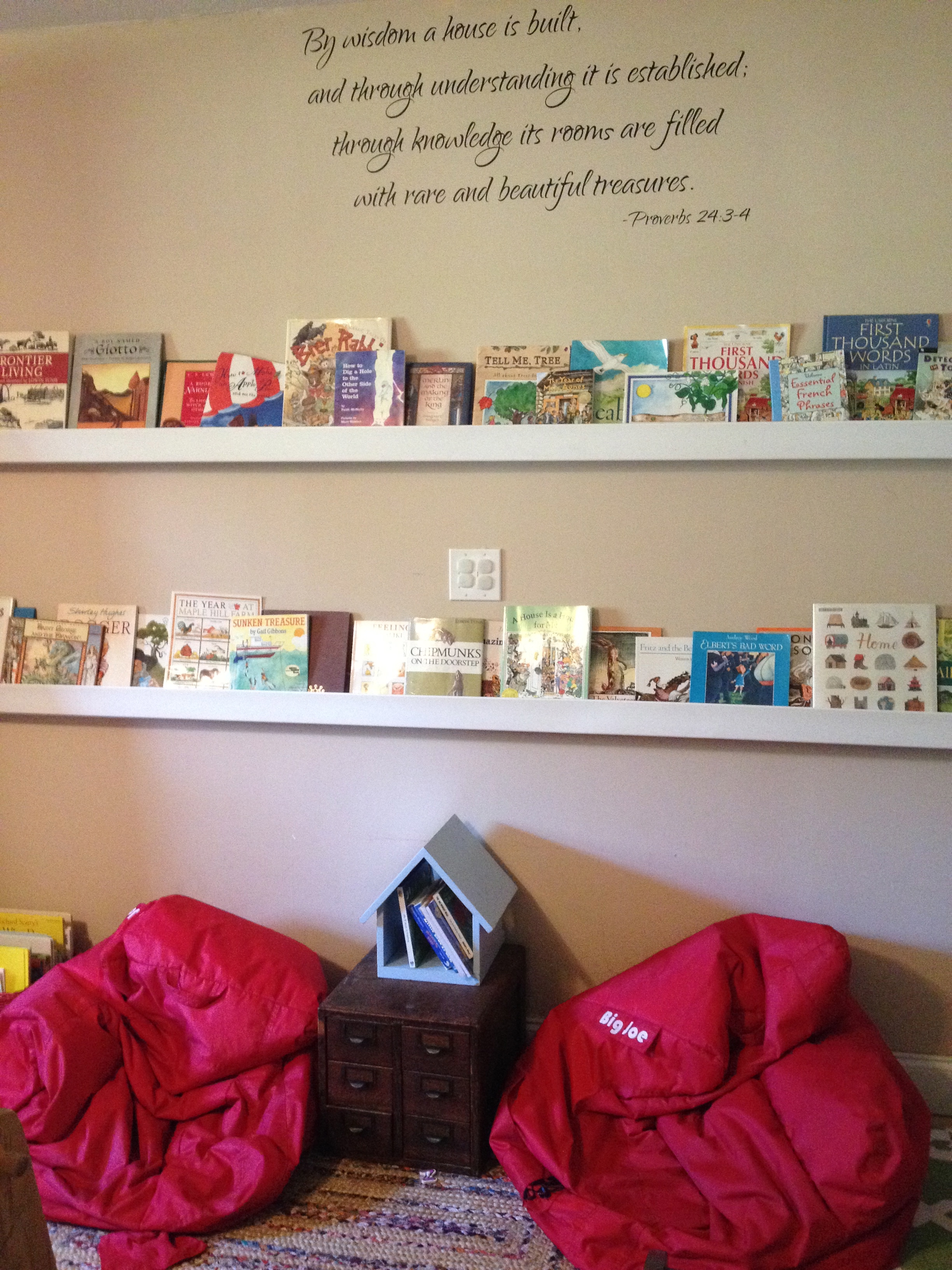
Lastly, the littles enjoy these Big Joe chairs (which lost their shapes 5 months after we purchased them). I usually leave the elders working on an assignment so I can cuddle up with Team B and a few books.

IMG_4622

And that is how we pulled stuff together this year for MFW Adventures. We are adding in our preschool curriculum this August so stay tuned for that bit of lunacy.

The Morning Hour: Listening, A Way of the Spirit

unnamed-2

The morning hour is one of the best times to work in reading aloud into our daily rhythm. Specifically, breakfast time.

I have a captive audience upon which to pour out beauty–for my children and for myself to soak in.

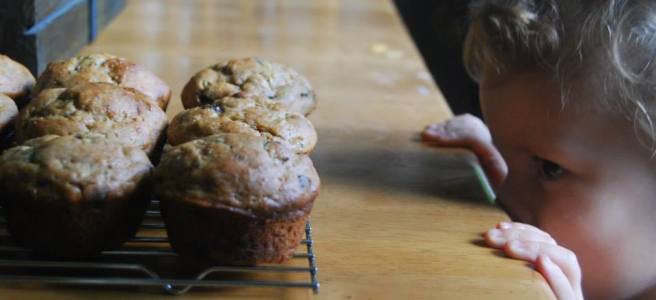
Starting the day off with something beautiful and purposeful, gently nudges us in a good direction. Even when kids are crabby and upset (TANTRUM), its good to know that we have this block of uninterrupted time to move slowly and work out kinks. Breakfast is a long affair at our house. Not fancy, just slow. The boys set out their dishes, napkin, cups. They pour out their drinks and sit down to wait for their food. Sometimes its just Ezekiel bread right out of the bag with a pat of butter on it.

We set things up, we pray and then, we experience beauty!

We are never in a hurry to finish.

They need time to think and absorb and process.

There are days when it takes 7 minutes start to finish and they are racing off to find an activity.

But there are also days when little hearts have questions they don’t know how to ask aloud and gentle patience is needed.

So I read to draw out their hearts. I read to pour in a piece of truth that will soak down into those soft pink ears to light upon their souls.

unnamed

We are currently reading through several poetry collections. We read one or two poems in the morning as a fun warm up. Oftentimes the kids will beg for more or ask for one long poem to be read out loud again. They have surprised me by memorizing several small poems after only a few readings. My boys love the cadence of poems. The certainty of what the next sound will be and the uncertainty of where the poet is taking them—calculated suspense! Poetry is adventure.

Next, we will read a lovely story. This book is almost always focused on virtue or character building.  We have read excerpts from biographies, short stories, children’s fiction, and allegories. The qualifications are simple: beauty and truth.

Composer study, Artist study, and hymn singing are also treasured parts of the morning.

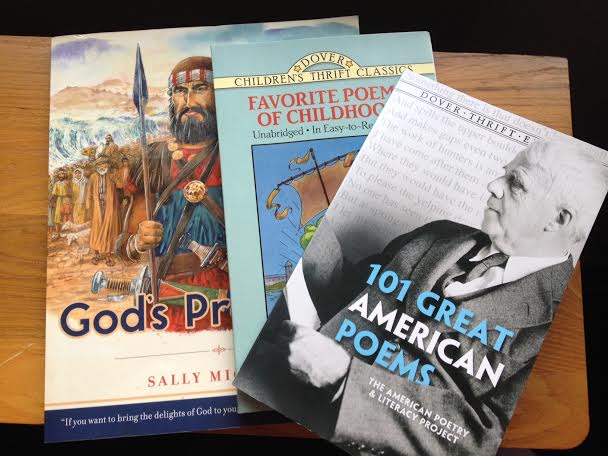
Lastly, we read a brief devotional from a study to close out the breakfast hour. We are currently reading through some devotions by Sally Michaels, who has become a household favorite! (I will include all book links at the end of the post).

1 or 2 poems
A story
1 small devotional

That has been the routine for many years. But now, we have a pair of second graders ready to read the Scriptures on their own.

I have never taught anyone how to read Scripture. Perhaps I will have fancier goals as time marches on, but for now the goal is simply this…

I want my children to be confident navigating the Word so they can feed themselves from Scripture.

I don’t want them to be depending upon me for their sole Scripture reading. Not at this stage in the game.  We will still read the Bible as a family, but they must now take up their swords and learn how to wield them on their own.

Our four and two year olds will be excused after the short devotional and the two elder children will be studying their own Bibles for 5 minutes.

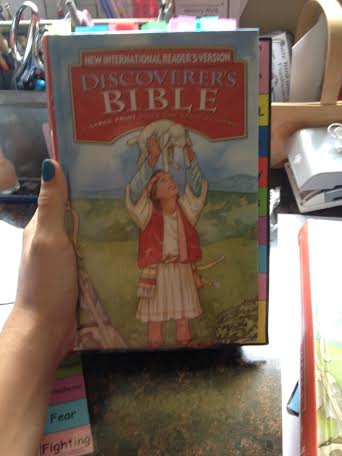
The Discoverer’s Bible is a large print Bible for early readers. We have incorporated the Child Training Bible program to help them in learning to navigate this precious tool.

unnamed-3

unnamed-4

The CTB includes 6-7 heavy-weight pages of guide material. The guide provides boxes with key struggles in grid form. References are provided so parents can hi-light and tab, related Scripture. My kids can open their Bibles and study the topic of “Anger,” together. They will read the prompt and discuss an example from the life of Jesus that I read to them. Then they will find the yellow box that says “ANGER”,  they will look in their Bibles and find all the yellow tabs on top, which lead to pages containing anger related verses hi-lighted in yellow. They are free to discover these verses and read them aloud or to themselves. Overtime they will become more familiar with where books of the Bible are found and will have read over 200 scripture references concerning struggles like “Fighting, Not Listening, Fear, Pride, Disobedience.”

I do wish the CTB incorporated other topics, like the Fruit of the Spirit, but for now it helps us in behavior training and Scripture training in a valuable way. I am glad that they have a thorough section entitled “The Gospel.”

I’ll let you know how things progress as the kids learn to feed themselves from Scripture!

Check out Ann Voskamp’s routine: “Listening: a Way of the Spirit” for more inspiration!

BOOK LIST

Poetry Collections:
A Garden of Verses by Robert Louis Stevens
Now We are Six by AA Milne
The Oxford Illustrated Book of Children’s Poems Edited by Donald Hall
101 Great American Poems
Favorite Poems of Childhood Edited by Phillip Smith

Stories:
10 Boys Who Made History by Irene Howat
10 Boys Who Made a Difference by Irene Howat
10 Boys Who Used Their Talents by Irene Howat
10 Boys Who Changed the World by Irene Howat
10 Boys Who  Didn’t Give In by Irene Howat
(Girl counterpart books found here).
Trial and Triumph by Richard Hannula
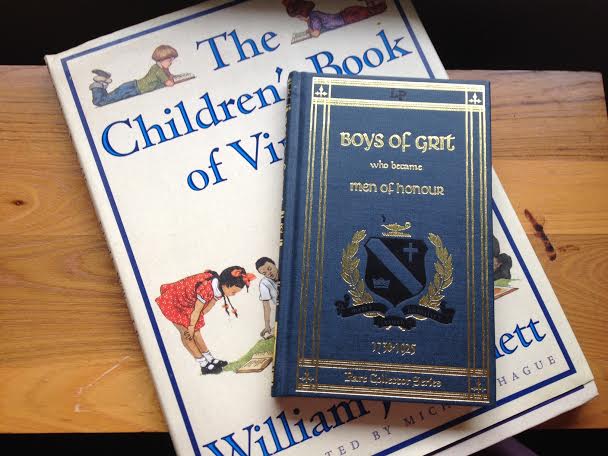
Boys of Grit Who Became Men of Honor by Archer Wallace
The Children’s Book of Faith by William J Bennet
The Children’s Book of Virtues by William J Bennet
Something from Nothing by Phoebe Gilman
The Quiltmaker’s Gift by by Jeff Brumbeau
When Daddy Prays by Nikki Grimes
The Circle of Days by Reeve Lindbergh
Song of Creation by Paul Goble

Devotions:
Five-Minute Devotions for Children by Pamela Kennedy (Many in the series)
Training Hearts Teaching Minds by Starr Meade
God’s Names by Sally Michaels
God’s Promises by Sally Michaels
God’s Wisdom by Sally Michaels
God’s Providence by Sally Michaels
God’s Battle by Sally Michaels
God’s Word by Sally Michaels
Thoughts to Make Your Heart Sing by Sally Lloyd Jones